The Holy Eucharist
The source and summit of Christian life and the heart of our communion with Christ.
Prayer & Habit
The life of the Anima Christi Missionaries of Consolation is rooted in Christ and nourished by prayer, spiritual direction, Eucharistic devotion, Sacred Heart spirituality, Marian devotion, and the Franciscan way of life. These interior foundations find visible expression in the signs of our consecrated and missionary life.
Our Life of Prayer
Prayer is the foundation of our consecrated and missionary life. Each day, we seek to return our hearts to Christ, allowing His Word and Eucharistic presence to shape how we live, serve, suffer, forgive, and love.
The source and summit of Christian life and the heart of our communion with Christ.
Remaining before the Lord, listening to Him and bringing before Him the wounds and needs of the world.
Listening daily to the Word of God and allowing it to form our minds and hearts.
Standing before God together as sisters and cultivating an interior relationship with Him in silence.
Walking with Mary, Our Lady of Consolation, who always leads us to her Son.
Contemplating Christ poor, humble, Eucharistic, and crucified in the spirit of St. Francis and St. Clare.
Our prayer does not remove us from the suffering of the world. It sends us into it with the Heart of Christ.
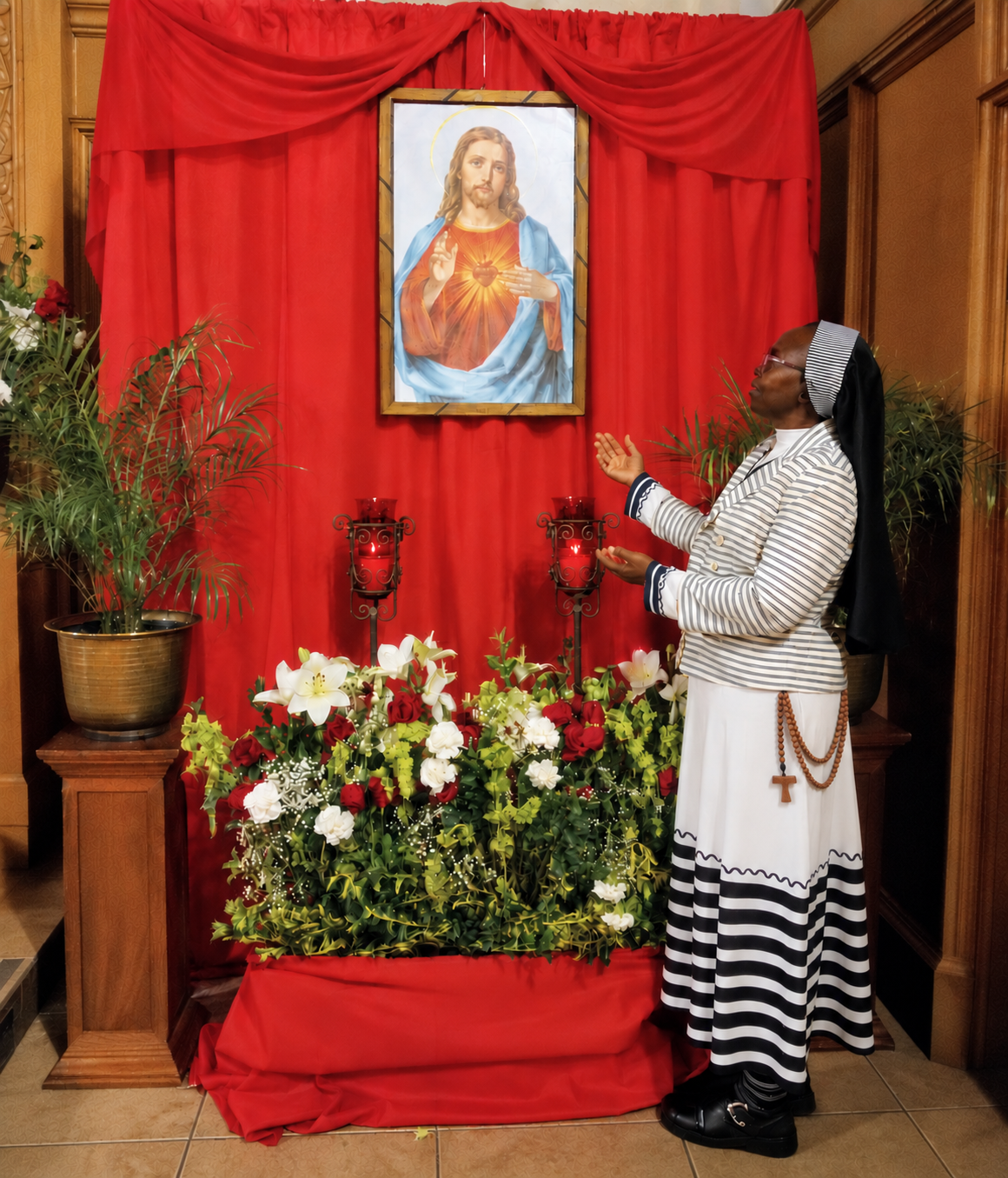
Sacred Heart of Jesus
Praying before the image of the Sacred Heart of Jesus on the Solemnity of the Sacred Heart of Jesus our Redeemer, the foundress contemplates the love of Christ poured out for the world.
The Sacred Heart is the source of our consolation, mercy, and missionary zeal.
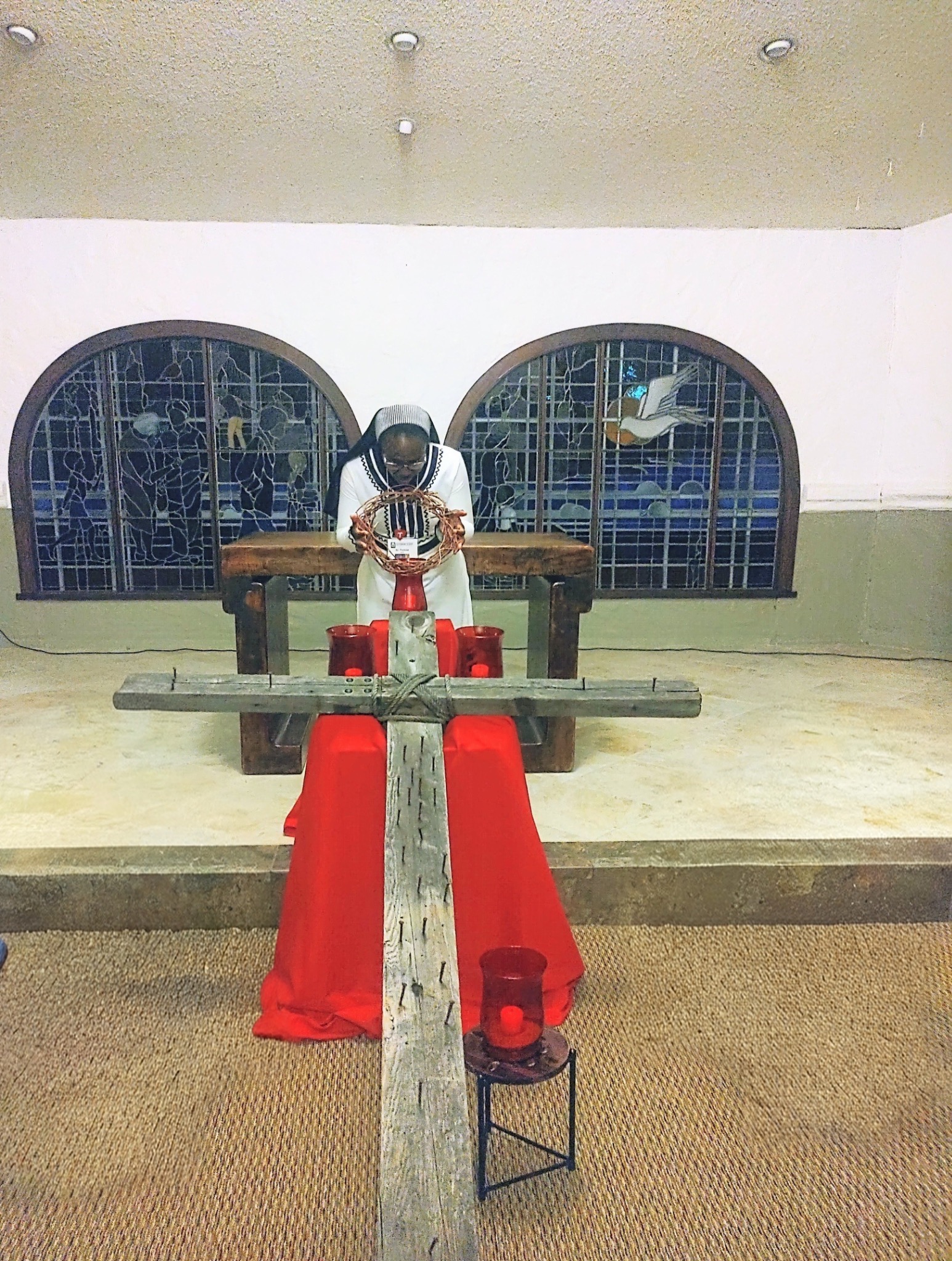
Good Friday Witness
On Good Friday, the foundress kneels before the Cross, holding the crown of thorns in prayerful remembrance of the suffering love of Christ.
This image expresses the heart of ACMC: to remain close to the wounded Christ and to bring His healing compassion to those who suffer.
By His stripes, we are healed.
Prayer in the Way of the Cross
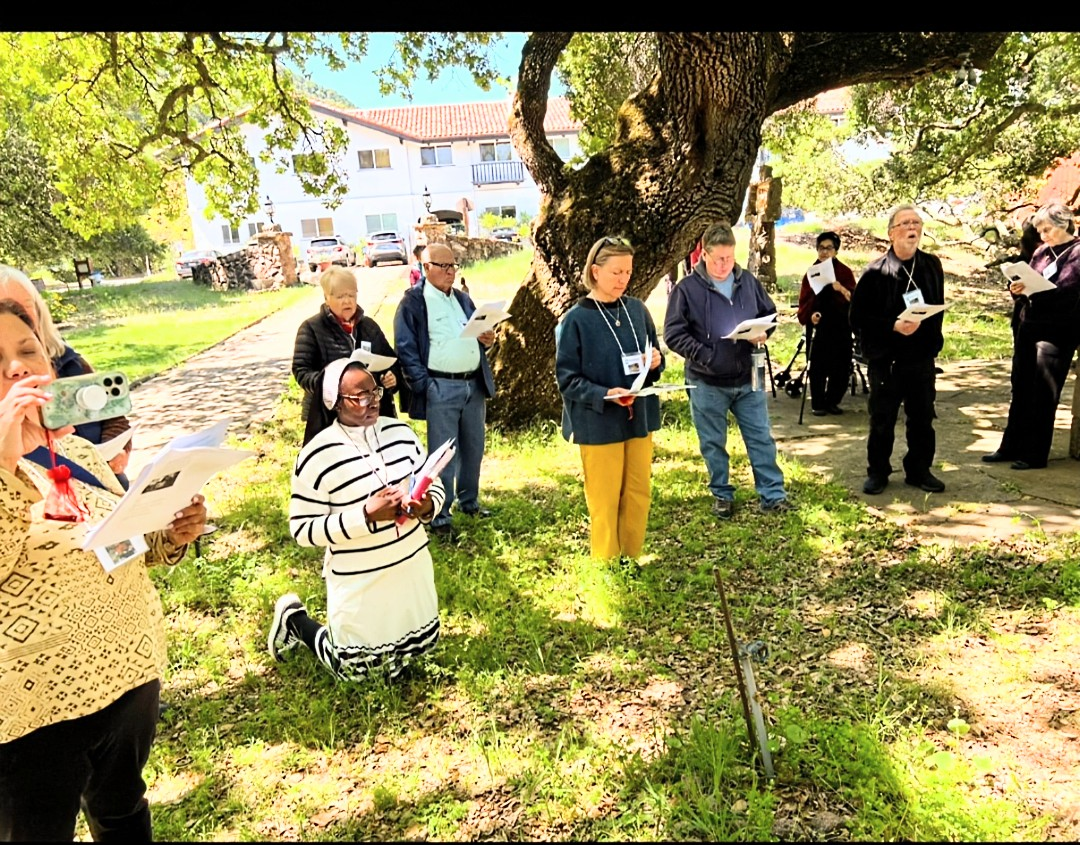
The Stations of the Cross draw us into the mystery of Christ’s suffering love. In this prayer, we do not merely remember events of the Passion; we learn to remain with Jesus and with those who carry heavy crosses today.
For ACMC, contemplation of the Cross forms the heart for consolation—teaching us to remain, accompany, pray, and hope even when suffering cannot be quickly removed.
Sister Felicia kneeling in prayer during outdoor Stations of the Cross on Good Friday.
Our Patroness & Mother
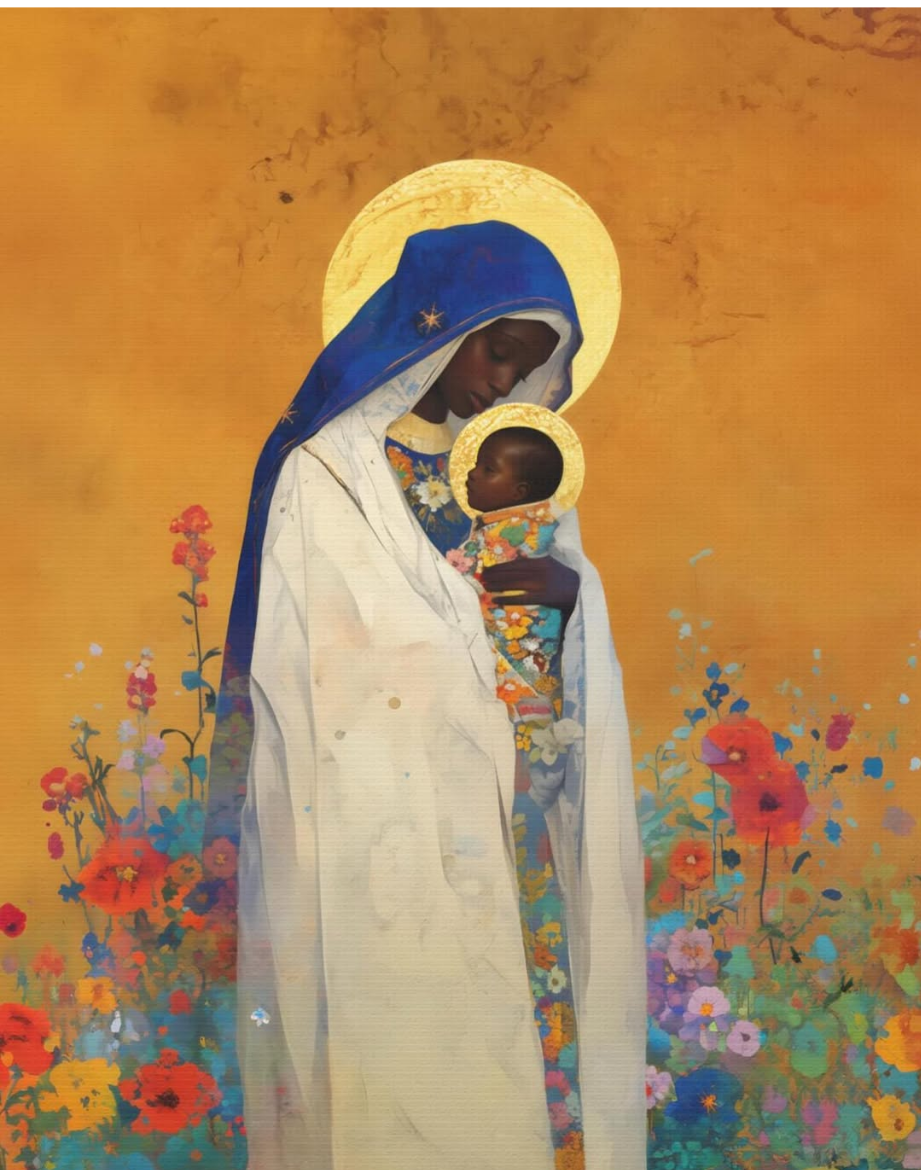
Mary, Mother of Consolation, holds a treasured place in the spiritual life and mission of ACMC. She is for us a mother, patroness, and model of compassionate presence.
This African representation of Our Lady of Consolation speaks especially to our mission among African families, children, widows, displaced persons, the poor, and wounded communities. In Mary’s embrace of the Child Jesus, we are reminded that Christian consolation is never merely a feeling: it is the loving presence of Christ offered to a wounded world.
“Comfort, give comfort to my people, says your God.” — Isaiah 40:1
Our Lady of Consolation, pray for us and for all who suffer.
Our Habit
Our habit is a visible sign of our belonging to Christ, our Franciscan identity, and our mission of consolation. The primary and secondary forms share the same spirit of simplicity, modesty, prayer, and readiness for service.
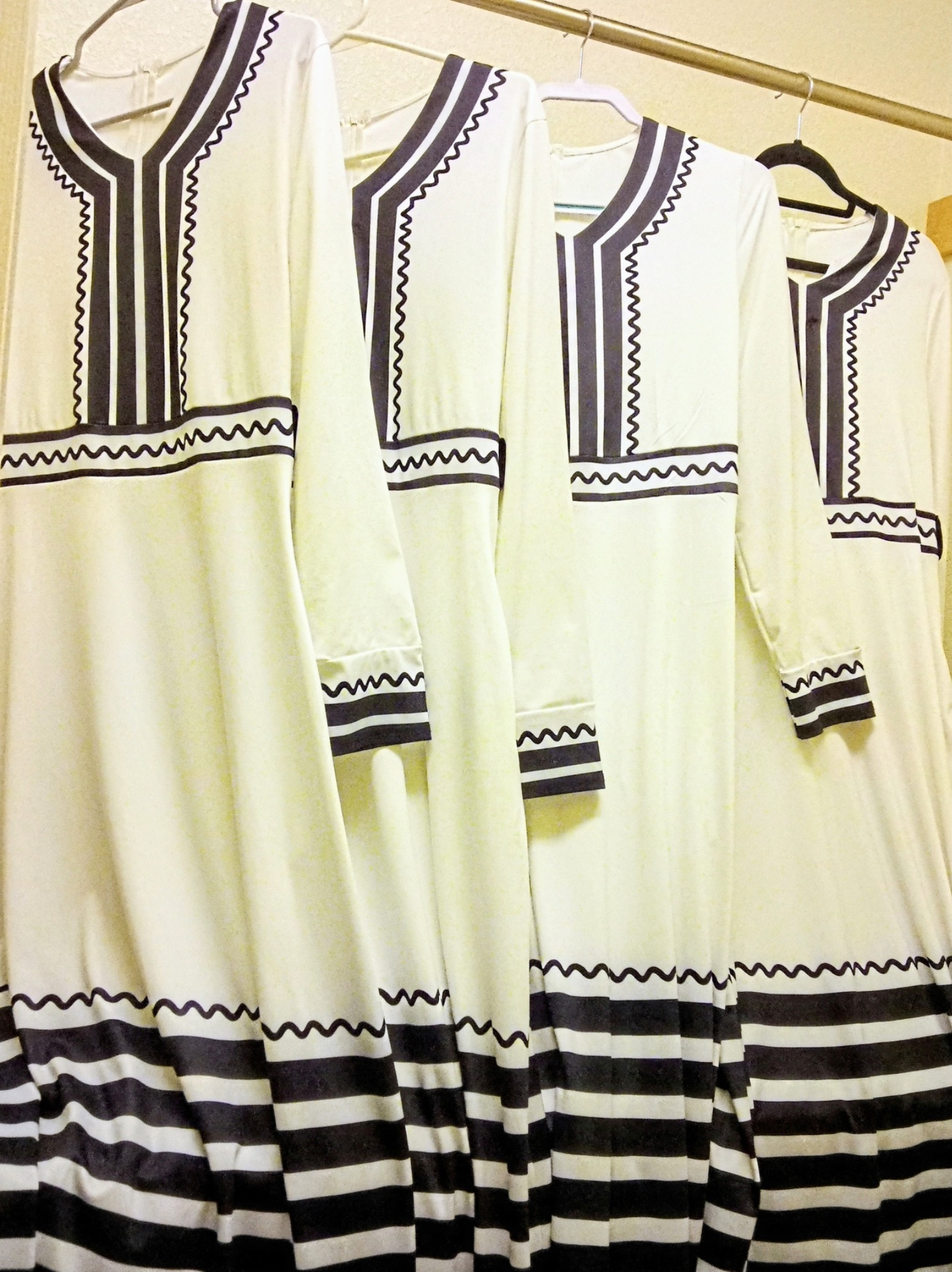
The principal ACMC habit, with its distinctive black-and-white design, is a visible sign of consecration, Franciscan simplicity, and our call to bring Christ's consolation to a wounded world.

Worn according to the circumstances of community life, ministry, and travel, the secondary habit remains visibly connected to ACMC through its distinctive black-and-white pattern and shared signs of belonging.

The simple white inner garment is worn beneath the habit as part of the complete form of dress, recalling purity of heart, modesty, and a life offered to Christ.

The Black Leather Belt
The black leather belt is worn as part of the ACMC habit. Simple and practical, it expresses discipline, simplicity of life, and readiness for service while completing the distinctive form of our religious dress.
“Stand therefore, having girded your waist with truth.” — Ephesians 6:14
“Put on the Lord Jesus Christ.” — Romans 13:14
The habit is not a costume or ornament. It is an outward sign of an interior consecration—a reminder that the Missionary of Consolation belongs first to Christ and is sent in His name to bring consolation to a wounded world.
The ACMC Veil
The veil is a visible sign of our total belonging to Christ, of our call to live a life of prayer, purity, humility, and service. It is a sign of consecration, a witness to the world, and a reminder to ourselves to remain focused on Christ the Consoler.
The ACMC veil is worn with both our primary and secondary habits. Its black fabric, distinguished by the black-and-white striped trim, reflects the simplicity and Franciscan character of our life while maintaining the distinctive identity of the Anima Christi Missionaries of Consolation.
Simple, modest, and practical, the veil accompanies us in prayer, community life, apostolic service, and mission. It reminds us that wherever we are sent, we belong first to Christ and are called to bring His consolation to His suffering people.
“Your beauty should not come from outward adornment … rather, it should be that of your inner self, the unfading beauty of a gentle and quiet spirit.”
— 1 Peter 3:3–4

The ACMC veil — a visible sign of consecration, Franciscan simplicity, and missionary belonging.
A Sign Worn Close to the Heart
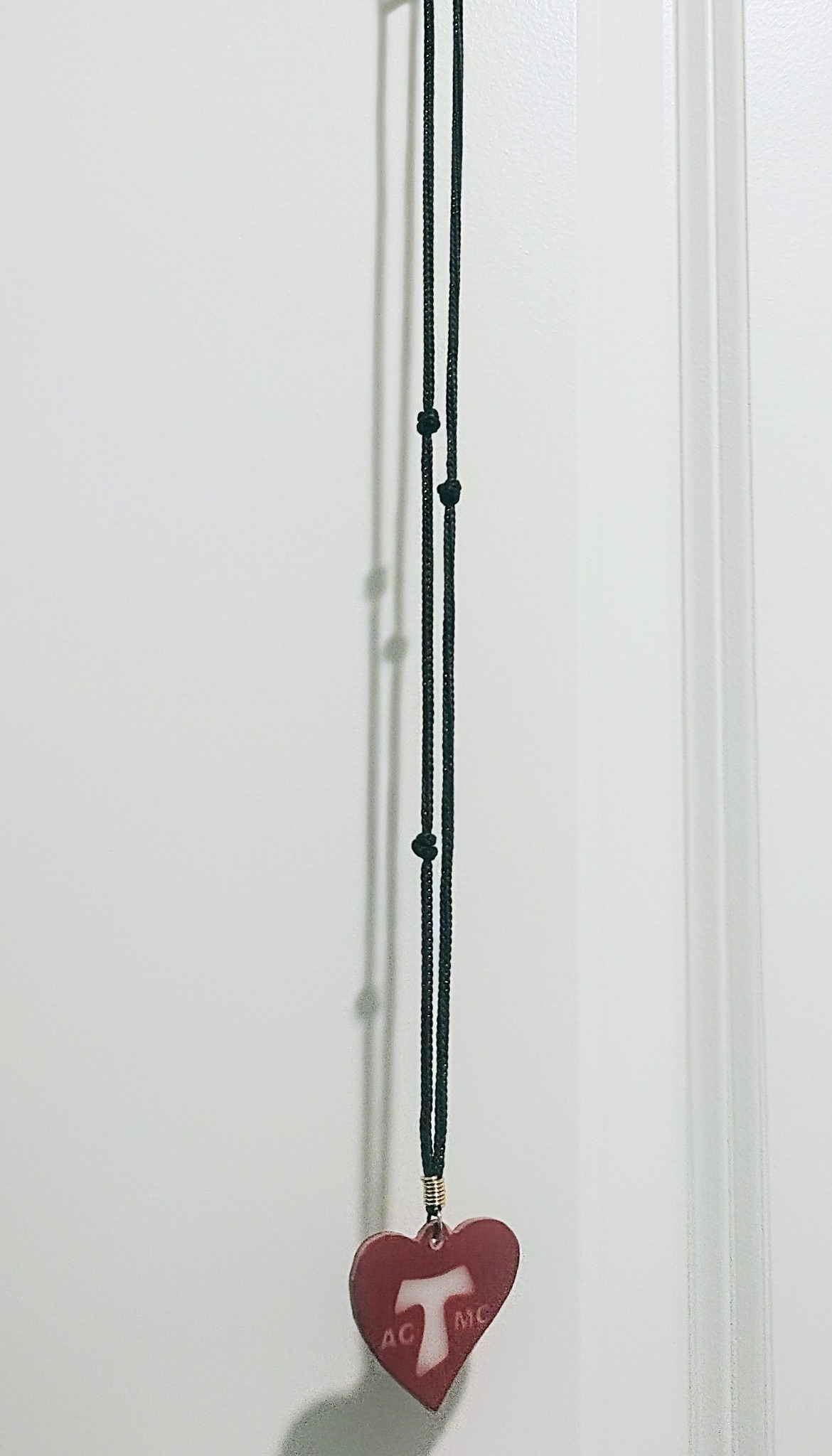
The ACMC emblem worn close to the heart brings together the heart, the Tau Cross, our identity, our vows, and our mission of Consolation.
The red heart recalls the love of the Heart of Jesus, Christ the Consoler, whose wounded love sends us toward a wounded world. At its center is the Tau Cross, a treasured Franciscan sign that recalls our call to conversion, simplicity, peace, and faithful discipleship.
The letters “AC” and “MC” identify us as the Anima Christi Missionaries of Consolation. Worn near the heart, the emblem reminds each member that her consecration must become a life of love poured out in service.
Our profession of poverty, chastity, obedience, and the fourth vow of Consolation for the suffering is not merely spoken; it is meant to shape the heart and become visible in the way we pray, live together, serve, and accompany God's people.
“By His stripes, we are healed.” — Isaiah 53:5
The Heart calls us to love. The Tau calls us to follow Christ in the Franciscan way. Our vows bind that love to a life of consecration. Our mission sends us forth to become consolation for others.
A Franciscan & Marian Sign
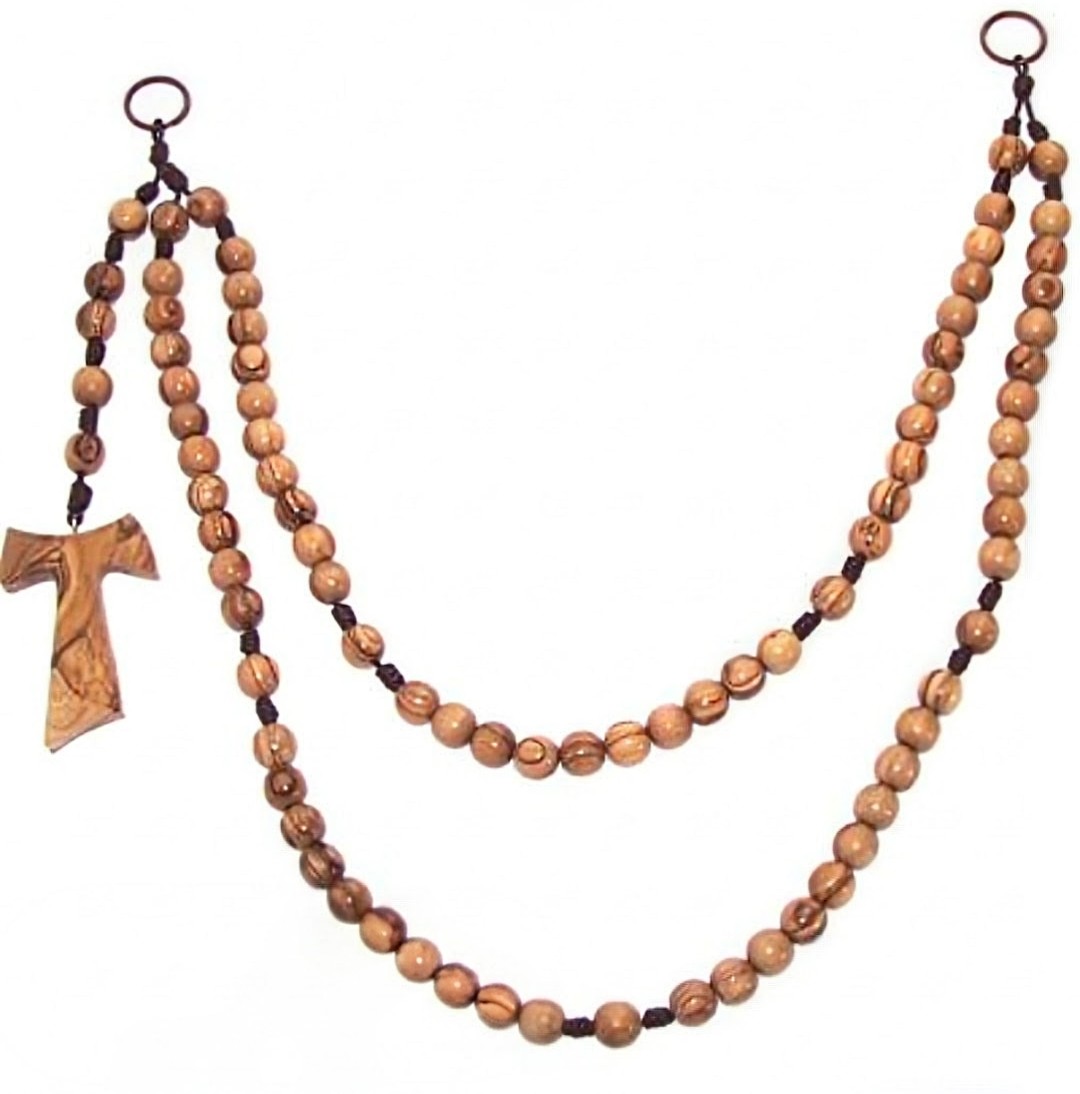
Also called the Seraphic Rosary or the Rosary of the Seven Joys of Our Lady, the Franciscan Crown consists of seven decades. ACMC wears the Crown on the left side of the habit as a sign of our Franciscan heritage and our filial devotion to Mary, Our Lady of Consolation.
The Franciscan Crown is worn on the left side of the ACMC habit, expressing our Franciscan heritage and our filial devotion to Mary, Our Lady of Consolation.
We meditate on the Annunciation, the Visitation, the Nativity of Jesus, the Adoration of the Magi, the Finding of Jesus in the Temple, the Resurrection of Jesus, and the Assumption and Coronation of the Blessed Virgin Mary.
Franciscan tradition traces the Crown to the fifteenth century and to a young Franciscan novice named James, who had offered a daily crown of roses to the Blessed Virgin. The tradition recounts that Mary taught him to offer instead a spiritual crown by meditating on her seven joys.
Each Joy is announced and followed by one Our Father and ten Hail Marys while meditating on the mystery. The Glory Be may be added after each decade. Traditionally, two additional Hail Marys are prayed at the end, followed by an Our Father and Hail Mary for the intentions of the Holy Father.
Worn at our side and prayed with our hearts, the Franciscan Crown reminds us to contemplate Christ with Mary and to carry the joy of the Gospel into a wounded world.
Before the Blessed Sacrament
We adore Thee, O Lord Jesus Christ, in this Church and all the Churches of the world,
R/. And we bless Thee, because, by Thy holy Cross Thou hast redeemed the world.
This prayer expresses the Eucharistic and Franciscan heart of the Anima Christi Missionaries of Consolation.

The Meaning Behind What We Wear
The habit and ACMC insignia are outward signs of a deeper gift of self to Christ.
Discover how poverty, chastity, obedience, and our distinctive commitment to Consolation shape the life of an Anima Christi Missionary of Consolation and prepare her to become a compassionate presence among those who suffer.